


Understanding the Right Suit Fit
Finding a well-fitting suit is not always easy. The fit of a suit depends heavily on an individual's body shape, while every manufacturer uses different cuts and proportions. As a result, the same size may fit differently from one brand to another.
Our Guide can help
Developing an eye for proper tailoring is essential when searching for the perfect suit fit. You should be able to recognize why a suit does not fit correctly and identify which areas can be adjusted. The following examples will help you make faster and more confident decisions when purchasing your next suit.
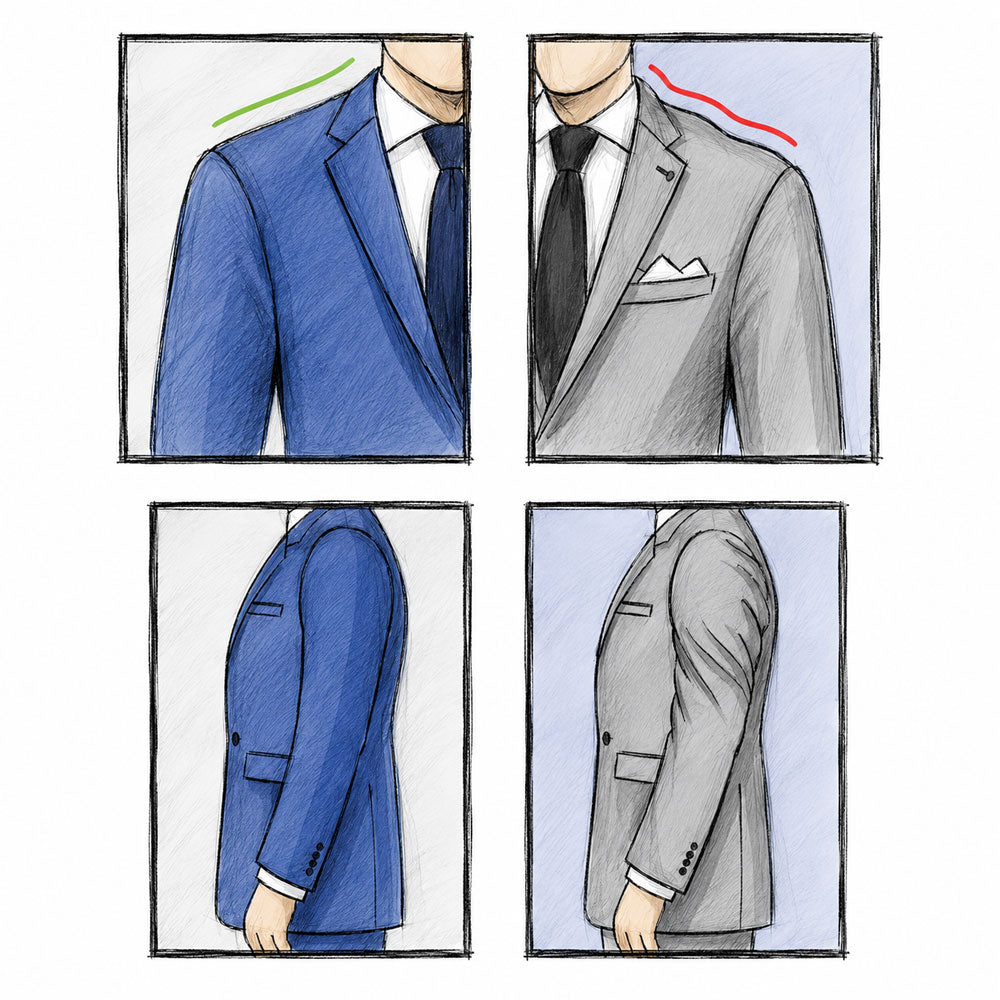
Shoulder Area – The Foundation of a Well-Fitting Suit
The shoulder seam of the jacket should sit precisely on the edge of your shoulder. A simple test is to run your finger down from the seam. It should fall naturally without catching on excess fabric or padding.
If the shoulders are too narrow, vertical wrinkles will appear across the back.
If the shoulders are too wide, excess fabric and padding will extend beyond the natural shoulder line. The sleeve will appear unstable and additional wrinkles may form.
Pay close attention to the back of the jacket:
- Vertical wrinkles often indicate shoulders that are too wide.
- Horizontal wrinkles usually suggest shoulders that are too narrow.
For men with rounded or forward shoulders, excess fabric may gather between the shoulder blades, creating horizontal folds commonly known as a neck wrinkle. In this case, a tailor can improve the overall fit of the suit.
A short neck can also cause fabric to collect beneath the collar, pushing the lapels downward and creating unwanted wrinkles. Tailoring adjustments are recommended here as well.
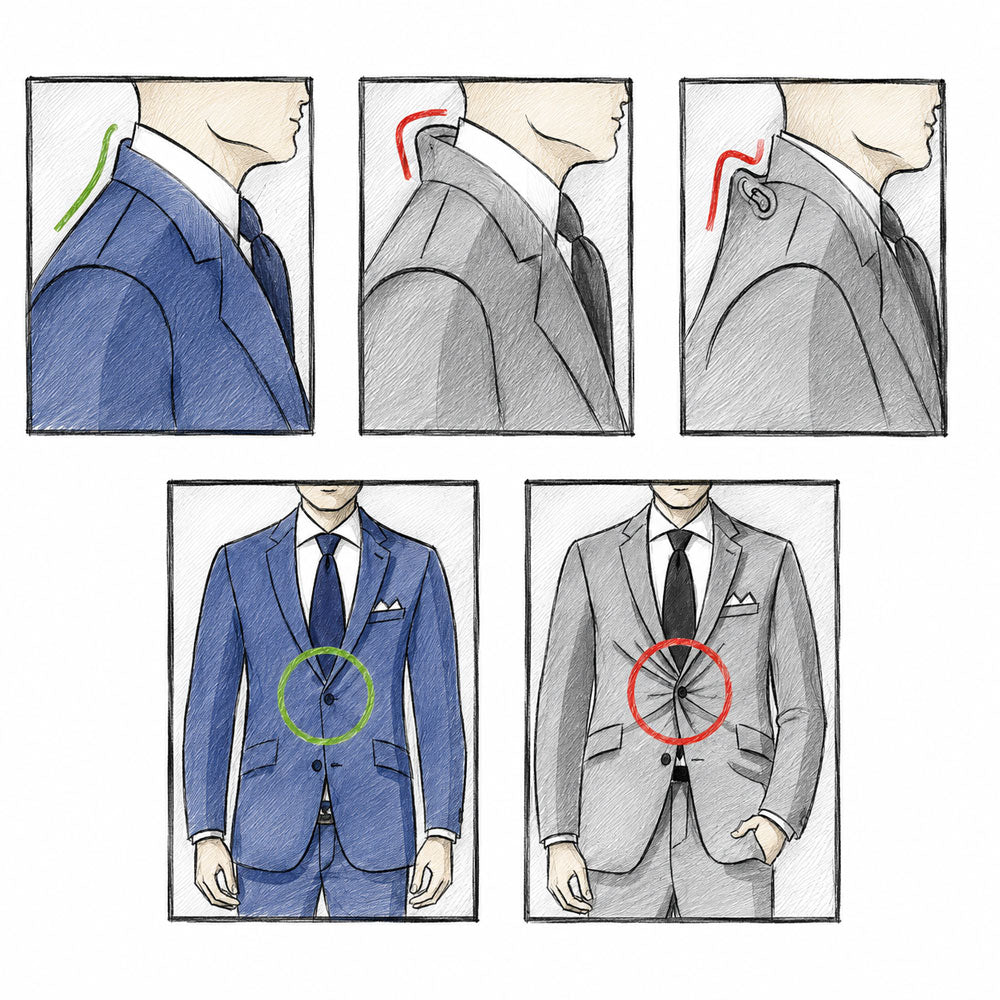
Neck Area – An Often Overlooked Part of Suit Fit
The collar should sit cleanly against the neck without leaving a noticeable gap between the collar and the shirt.
Several factors can cause this issue:
- Rounded shoulders pulling the jacket backward
- Poorly positioned shoulder seams
- A jacket that is too short
If the jacket is too short, the button sits too high and creates tension across the front. This often results in an X-shaped pull around the button. The tension lifts the jacket upward and causes the lapels to separate, which can also affect the fit around the neck.
Therefore, make sure that:
- The jacket length is correct.
- The button sits between the chest and the waist.
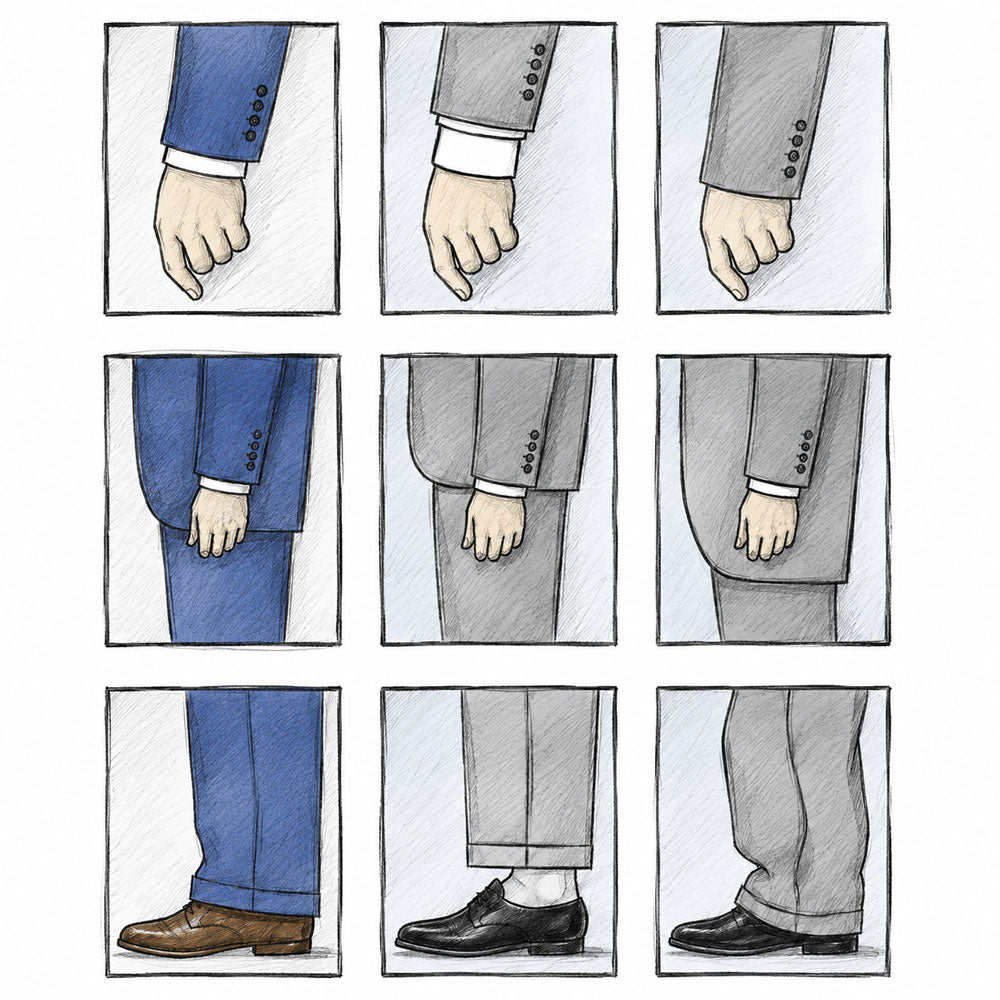
Sleeve and Trouser Length – The Details That Complete the Fit
Proper sleeve length is an important part of a well-fitted suit.
- The sleeve should end at the wrist bone.
- Approximately half an inch (about one finger's width) of shirt cuff should remain visible.
Sleeves that are too short or too long can quickly look unbalanced. Small variations of around 1.5 cm are largely a matter of personal preference.
Always check sleeve length with your arms hanging naturally at your sides. When you raise your arms, the sleeves will move upward and appear shorter than they actually are.
Trouser Length
A simple rule for proper trouser length:
- No break at the back
- A slight break at the front
Trousers that are too short often appear disproportionate, even if the intention is to showcase your socks. Socks should only be visible subtly when walking or sitting.
Trousers that are too long bunch up and create excessive wrinkles. This makes the leg appear wider and less refined. In extreme cases, the folds can extend all the way to the back of the knee.
The Ideal Trouser Length
- Falls cleanly to the ankle
- Maintains its shape
- Creates a slim and modern silhouette
One important rule of suit fit: the slimmer the trouser leg, the shorter the trousers should be. Slim-cut trousers naturally rest more on the shoe than wider cuts.
Silver Collection


